38. Anglo-Saxon Accounting
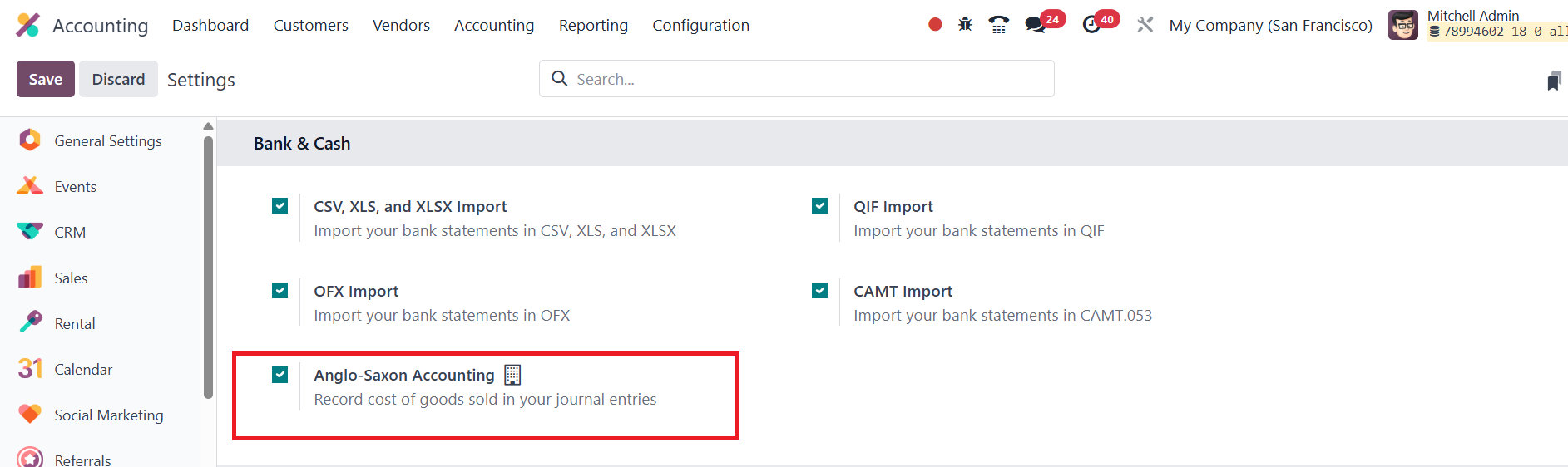
Anglo-Saxon Accounting is one of the two primary accounting methods
used globally, with Continental Accounting being the other. The
Anglo-Saxon approach is commonly preferred by smaller communities
and is available in Odoo 18's enterprise edition. To enable it, you
must activate Developer Mode and navigate to the Settings menu
within the Accounting module.
The primary distinction of Anglo-Saxon accounting lies in its
treatment of expenses related to goods. In this method, the costs of
sold products are only recognized once the goods are sold or
delivered to the customer. This differs from Continental Accounting,
where the cost is recognized immediately upon receipt of goods into
stock.
For example, in Anglo-Saxon accounting, even if you create a purchase
order for a product or receive the goods, the expense account
remains unaffected. The expense will only be recognized when an
invoice is generated and the goods are billed to the customer.
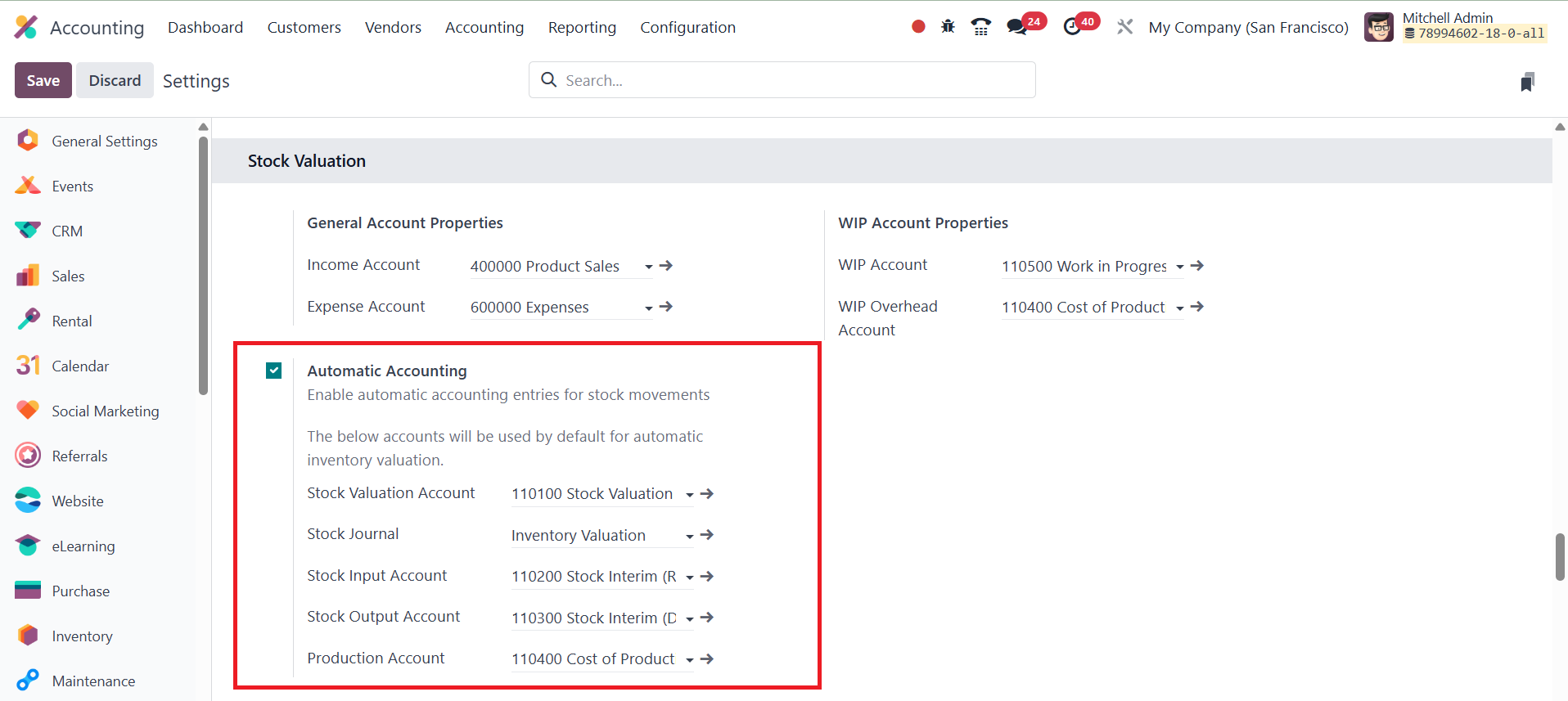
To automate this process in Odoo 18, you need to set up Automatic
Accounting in the product's settings and activate automatic
accounting entries for stock movements under the Configuration
Settings of the Accounting module.
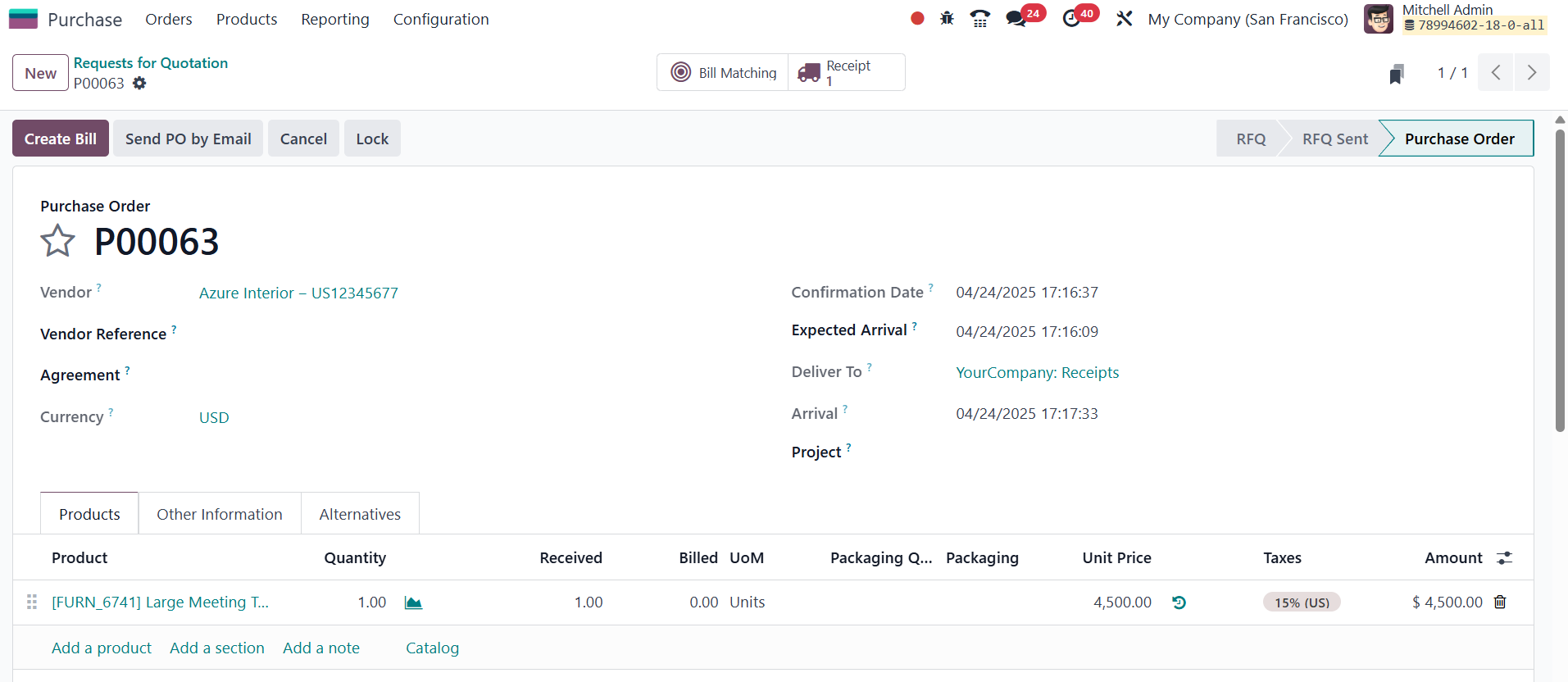
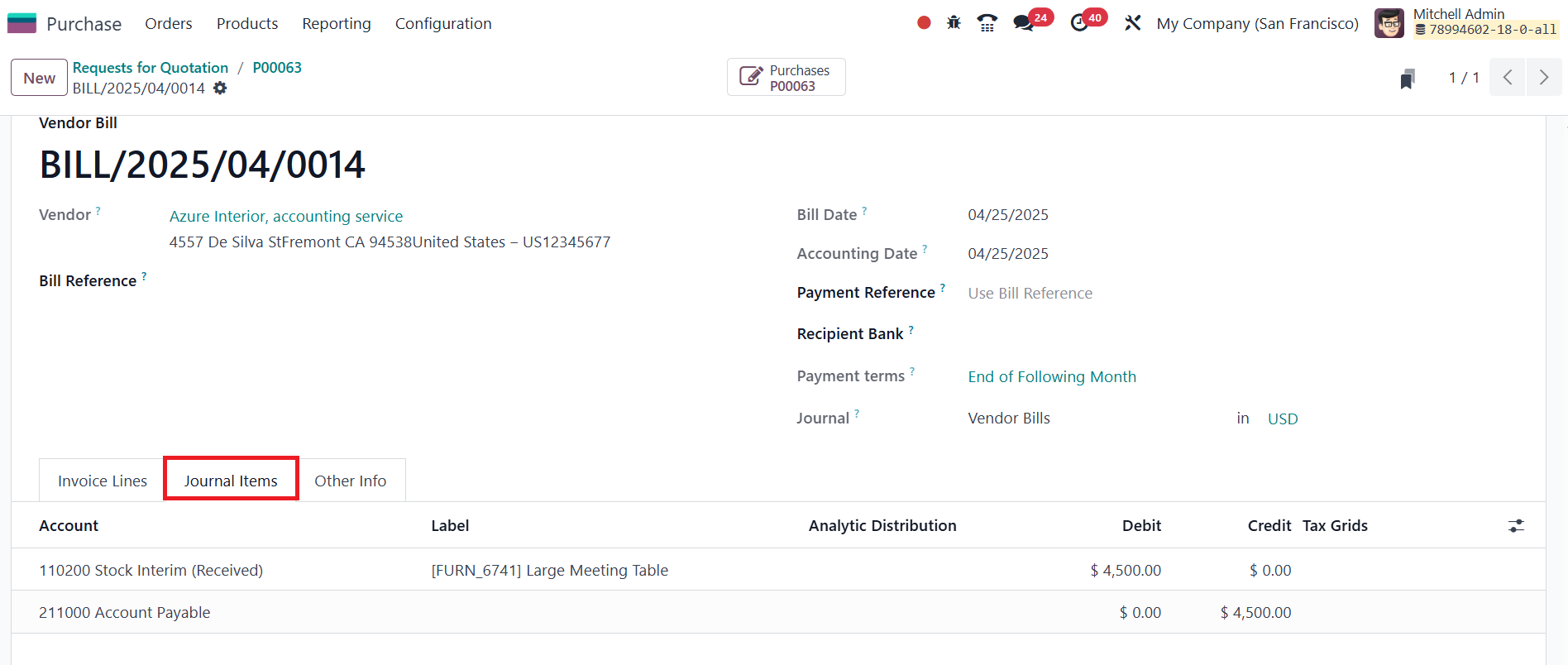
Once the purchase order is confirmed, and the goods are accepted, you
can verify the associated journal entries within the Journal Entries
section of the Accounting module.
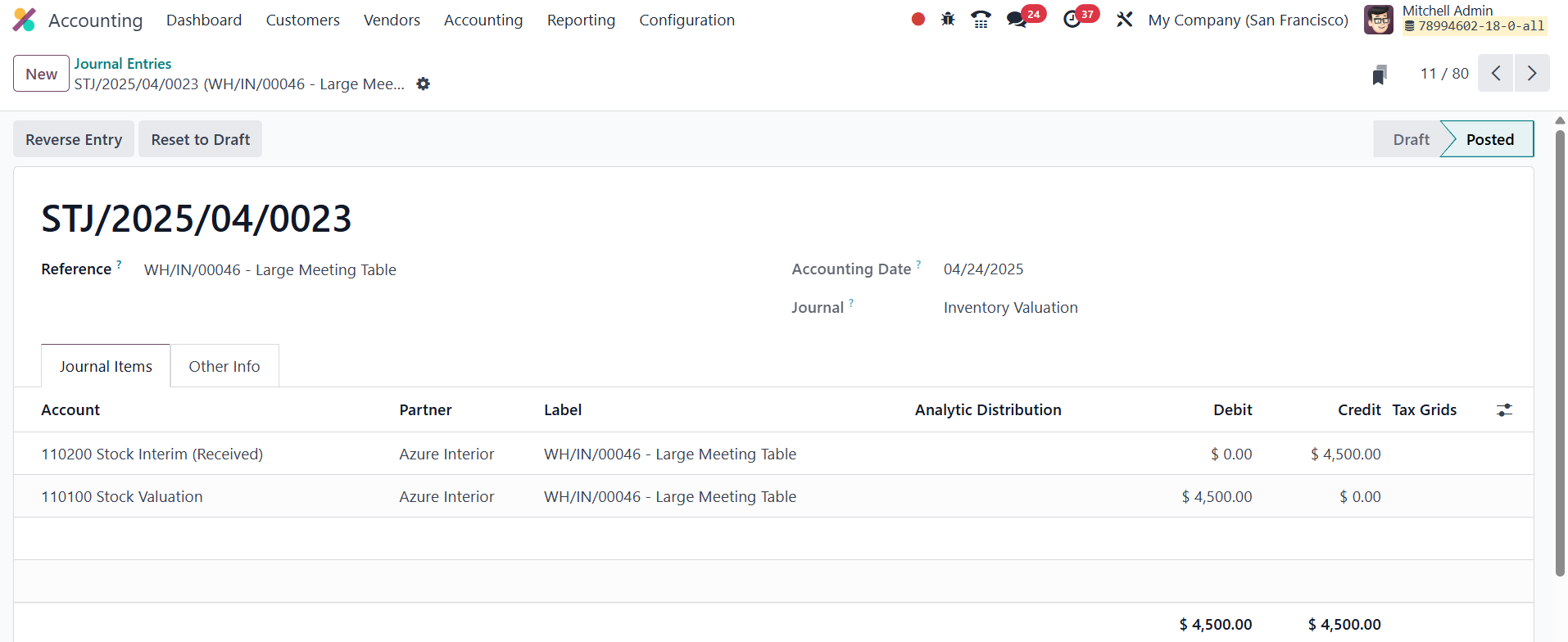
However, at this point, the expense account remains unaffected.
When dealing with sales, the impact of Anglo-Saxon accounting on the
expense account becomes clearer.
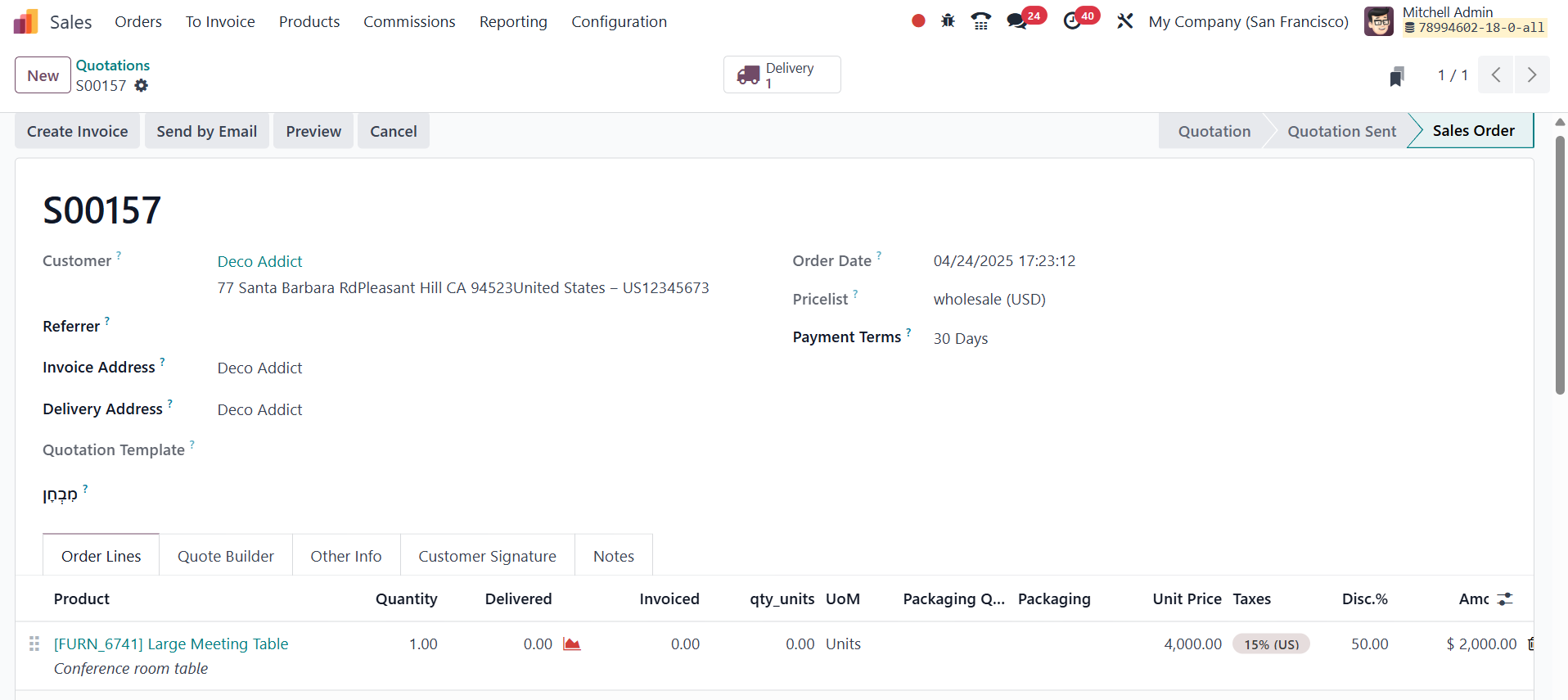
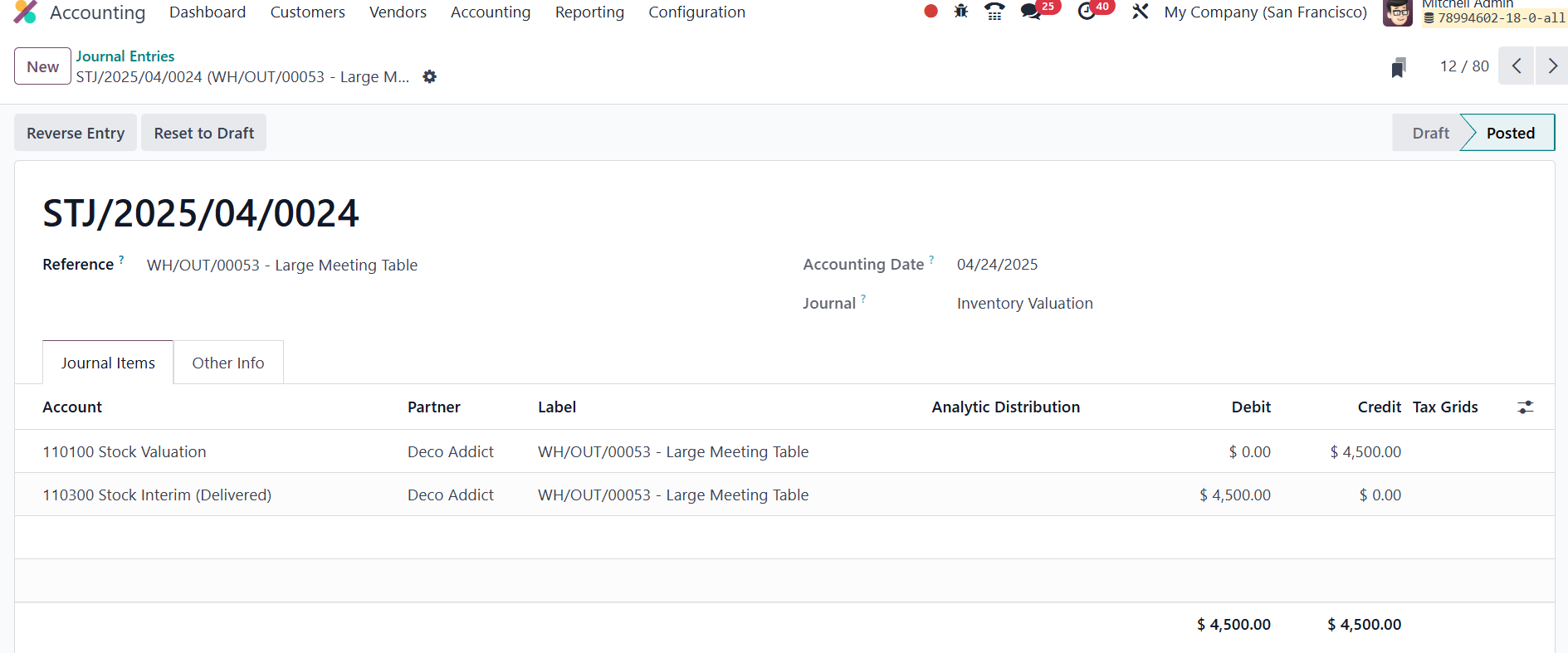
After confirming a sales order and validating the delivery, you can
see the related journal entries for the sale in the Accounting
module.
After the sales invoice is generated and confirmed, the product's
cost is recognized as an expense.
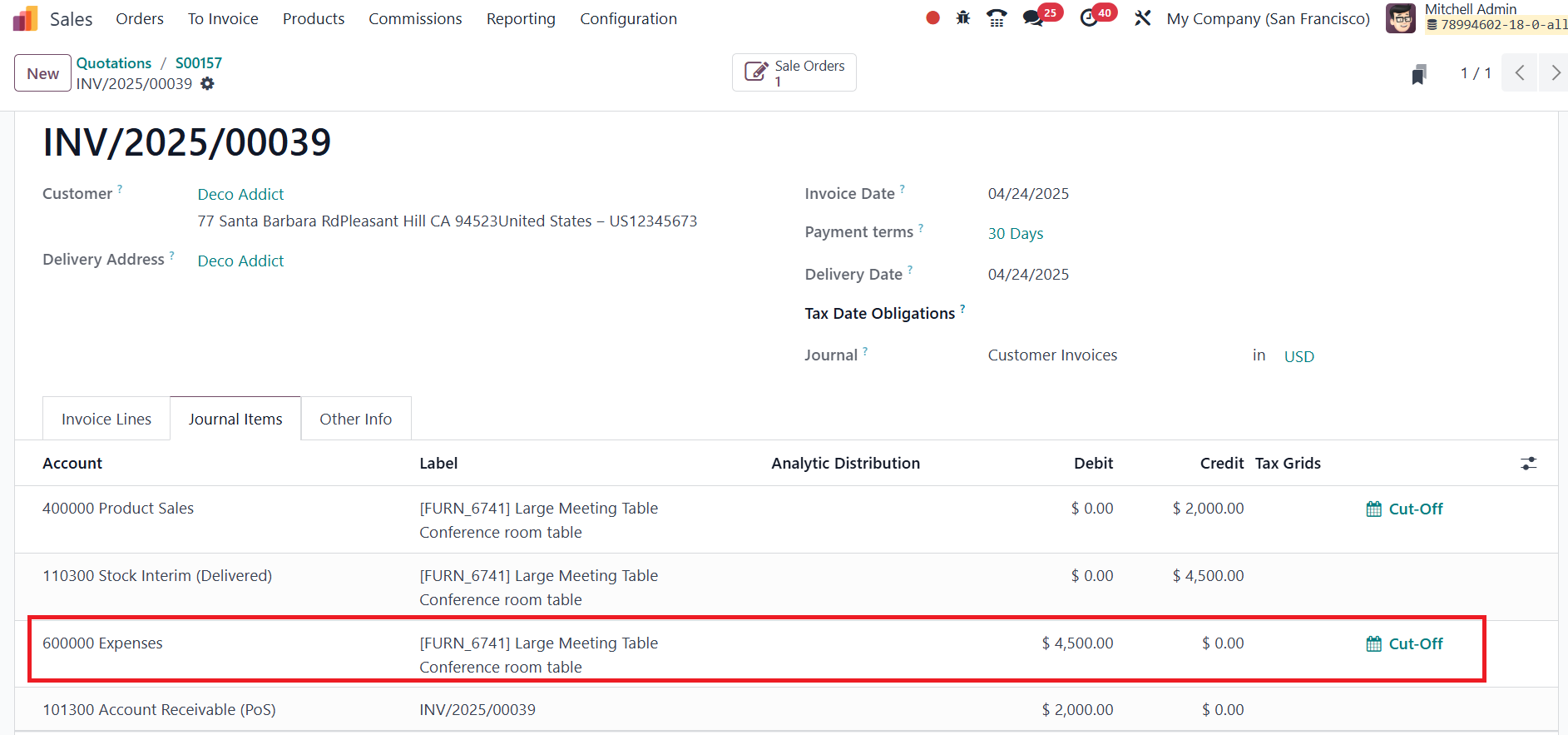
Thus, in Anglo-Saxon accounting, costs are only recognized after the
sale is completed and invoiced, providing a more straightforward and
delayed recognition of expenses in contrast to Continental
Accounting, where expenses are recognized sooner.