In Odoo18, storno accounting is defined as the technique of applying negative numbers to reverse original journal account entries. In Eastern European countries, storno accounting is a common corporate technique. Many countries require Storno Accounting, including:
Bosnia and Herzegovina
- China
- Czech Republic
- Croatia
- Poland
- Romania
- Russia
- Serbia
- Slovakia
- Slovenia
- Ukraine
In order to prevent duplicate figures in the accounting system, they believe that the storno accounting is the best way to reverse journal entries with negative debits and credits. For a number of reasons, including mistakes in the original transaction or the need for a refund for returned goods, the reversal may take place. Because bookkeepers frequently write Storno records in red ink, this accounting method is also referred to as Red Storno. All such items will be shown in red in the accounting reports.
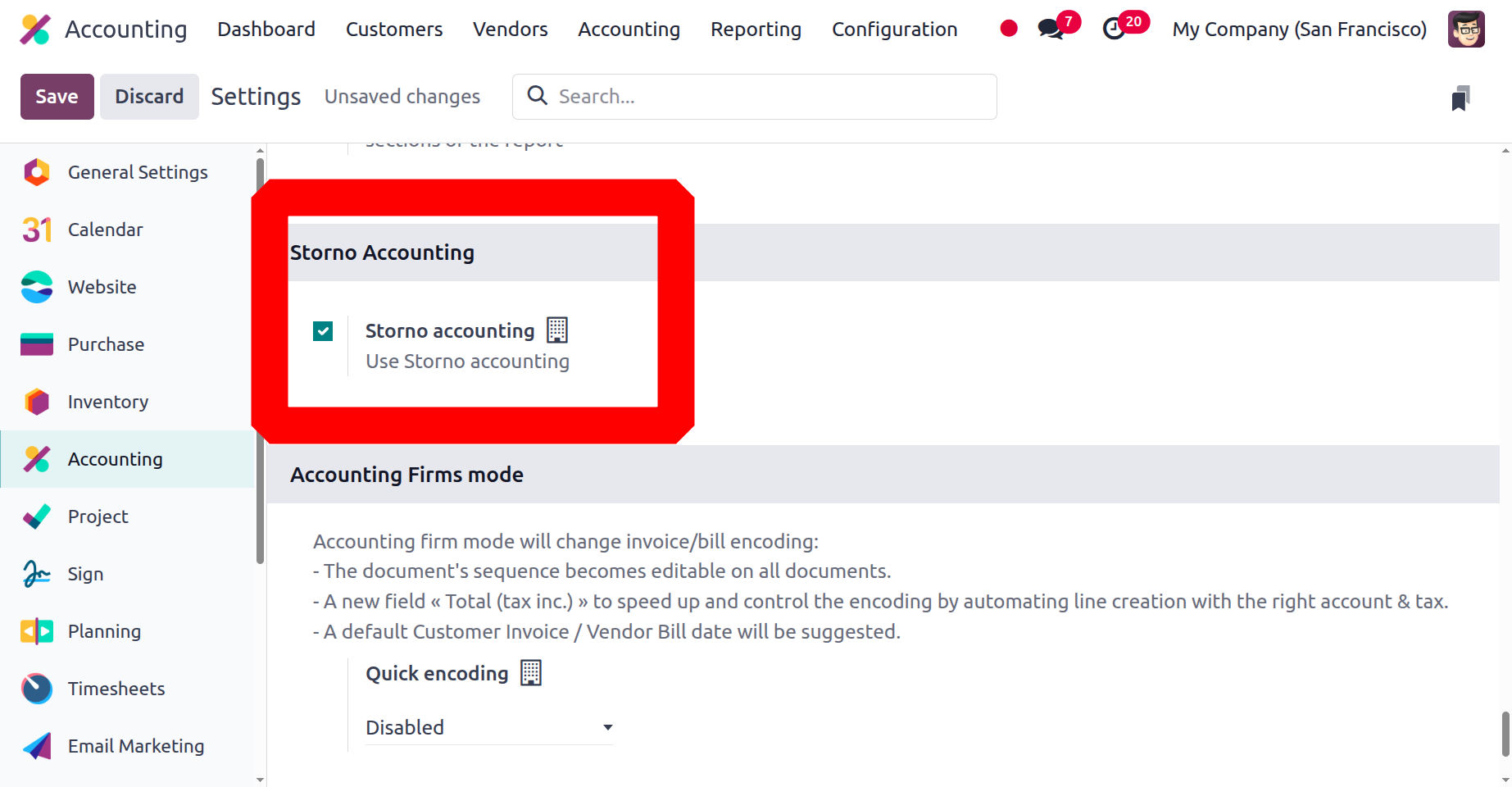
Turn on "Storno Accounting" in the Configuration Settings of the Odoo 18 Accounting Module to utilise these features.
Generally speaking, some ledger accounts will be affected whenever a transaction occurs, such as when an invoice is created. When an invoice is paid, the Accounts Receivable is typically debited and the Income Accounts are credited. In the event that this transaction is reversed, the Accounts Receivable will typically be credited, and the Income Account will be debited. For the reverse entry, however, the income account will be a "-ve" credit and the accounts receivable a "-ve" debit under Storno accounting.
Generally speaking, some ledger accounts will be affected whenever a transaction occurs, such as when an invoice is created. When an invoice is paid, the Accounts Receivable is typically debited and the Income Accounts are credited. In the event that this transaction is reversed, the Accounts Receivable will typically be credited, and the Income Account will be debited. For the reverse entry, however, the income account will be a "-ve" credit and the accounts receivable a "-ve" debit under Storno accounting.
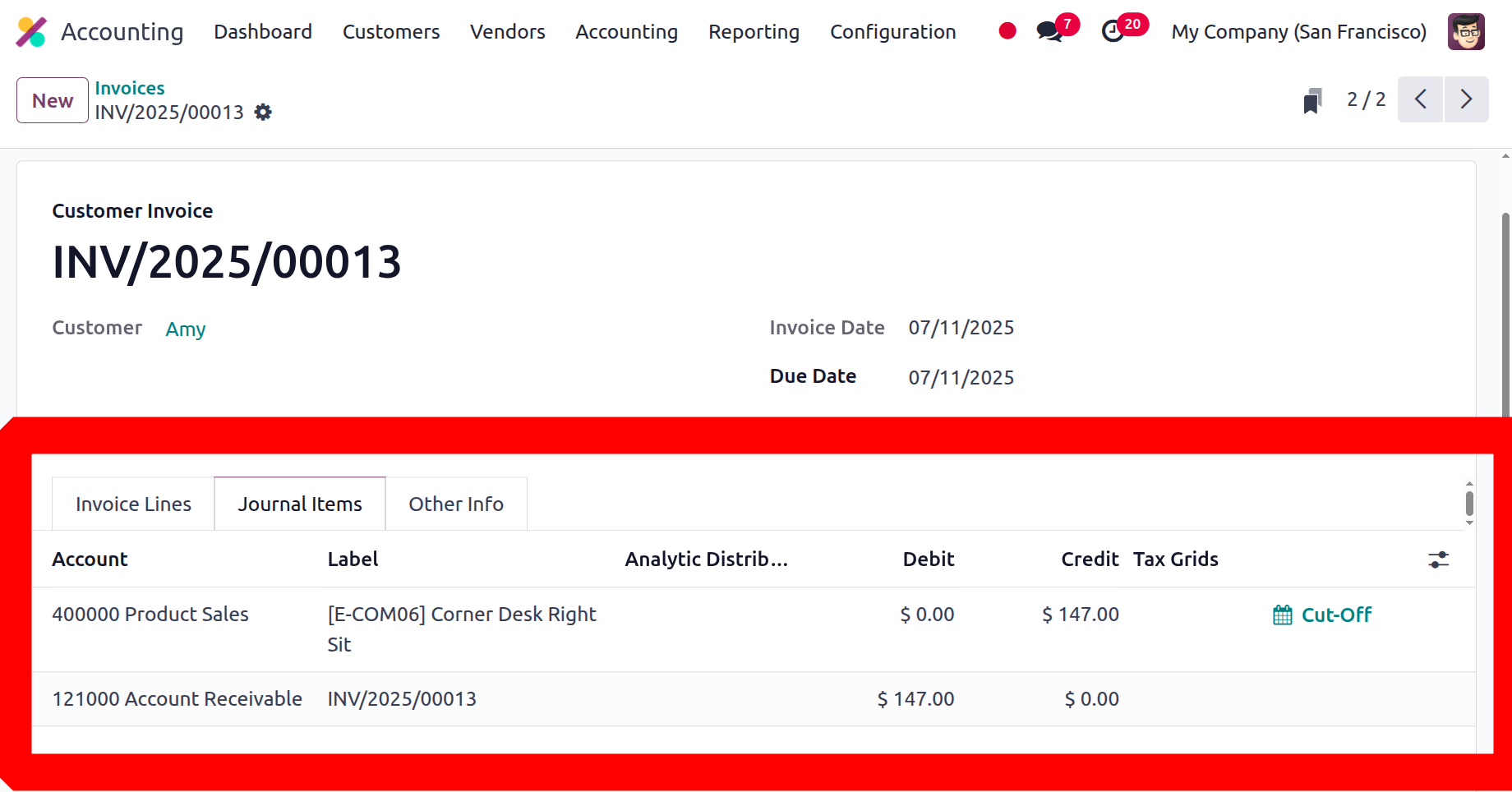
Take a look at the newly added invoice in the screenshot below.
Additionally, a credit note is created, posted, and recorded for some reason if this invoice is reversed. Now let's look at the journal entry and how each ledger is impacted.
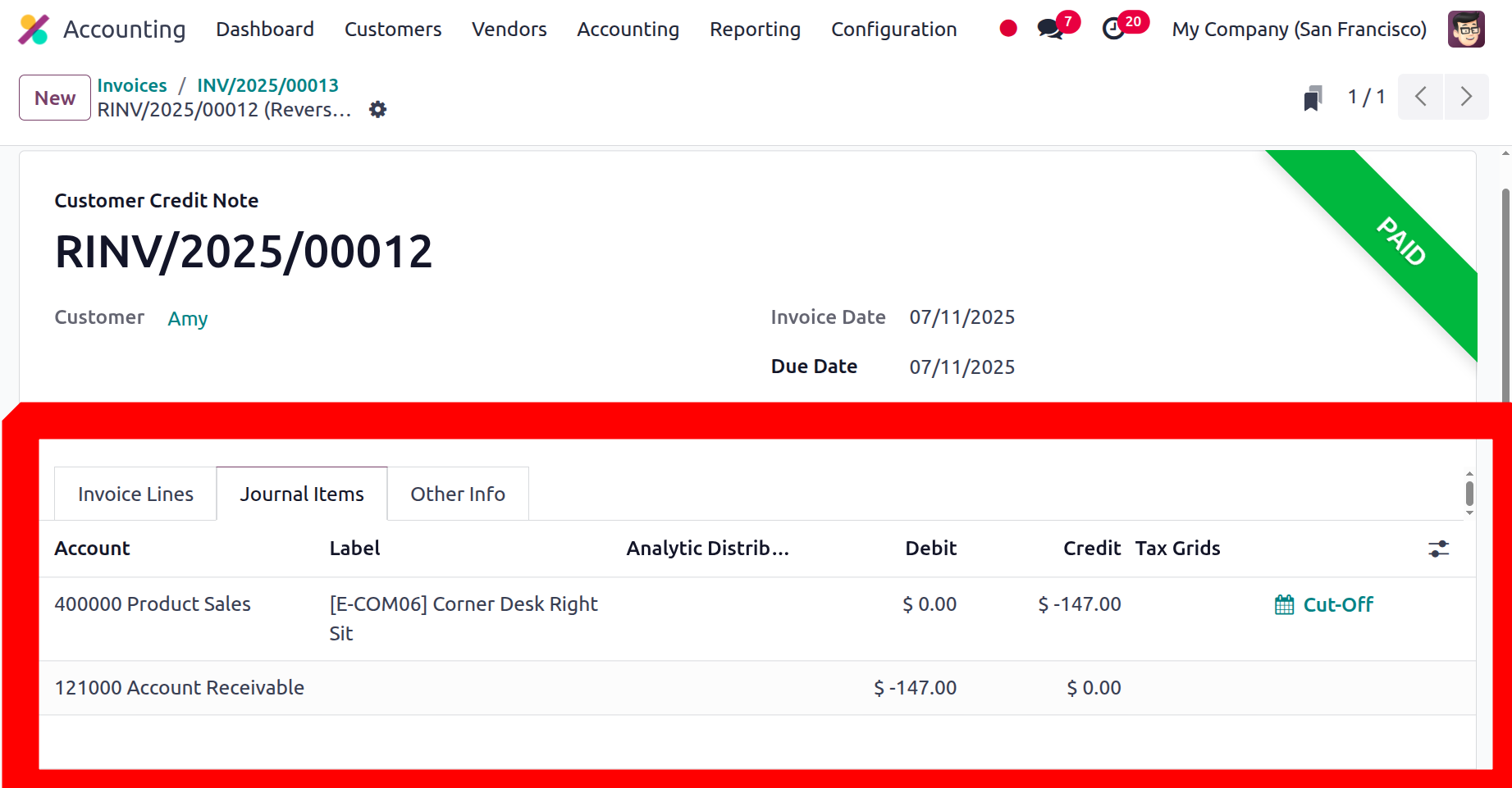
While the Income Account is Credited and the Account Receivable is Debited when an invoice is created, the Income Account is established as the opposite entry and is Debited, and the Account Receivable is Credited when a reverse invoice or credit note is created.

Debits and credits for reversed journal entries are negative when Storno accounting is enabled. Create a credit note and an invoice in accordance with the invoice. The next step is to view the ledger posting in Storno Accounting.
Invoicing involves first crediting the Income Account, then crediting the Tax Account, and finally debiting the Accounts Receivable. A reversed journal entry results in a negative amount being debited from the Accounts Receivable and a negative value being credited to the Income Account and Tax Account. In summary, the posting to both the standard ledger and the Storno ledger is shown in the table below.